
Skip to content
  • English
  • Italiano
language
Facebook page opens in new windowInstagram page opens in new windowYouTube page opens in new windowPinterest page opens in new windowLinkedin page opens in new windowTiktok' page opens in new window
  • Shop Online
  • Newsletter
store locator
Il Bisonte Firenze
Luxury for free spirits
Il Bisonte Firenze
  • News
  • Magazine
  • Art Bags

/ JOURNAL

  • News
  • Magazine
  • Art Bags

L’antico (The ancient)

You are here:
  1. Home
  2. Journal
  3. L’antico (The ancient)

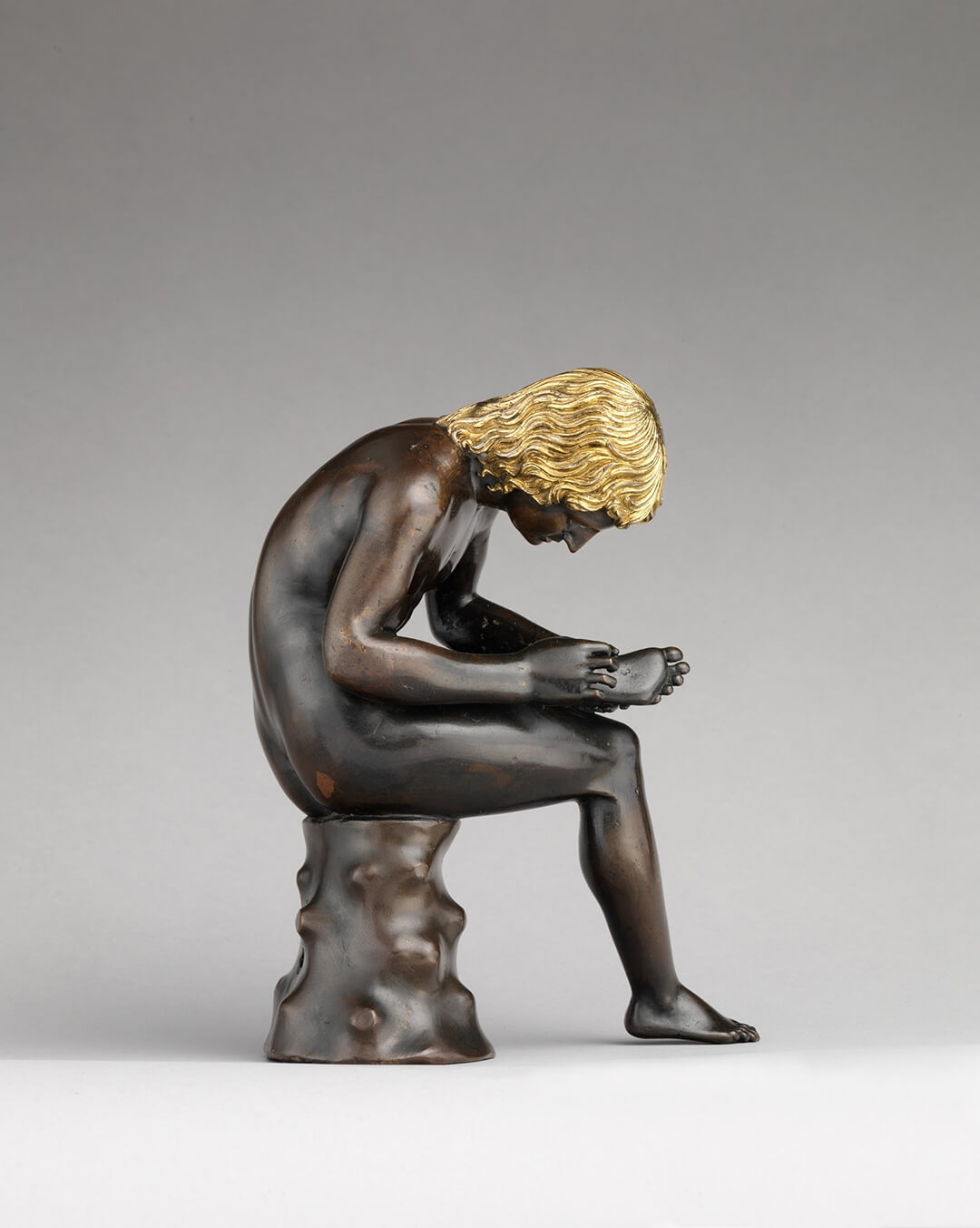
Image courtesy of The Metropolitan Museum of Art

By now every new Journal story appears within a tangle of other stories. In fact, recounted from different timelines and geographical locations, these stories didn’t seem to have much in common before. But up close, the tangle of threads seems almost orderly. Just think back to the plaster statue of Athena, in Xu Beihong’s studio a few journal issues ago.


PLASTER COPIES IN CHINA, BRONZE COPIES IN MANTUA


Another story, another artist, and today we’ll meet [drum roll] Pier Jacopo Alari Bonacolsi Gianfrancesco Riccardino (just kidding, those last two names are made up). Better known as: L’Antico (the Ancient). “What’s this, an insult?” No, no. He didn’t simply imitate classical marble statues, plagiarizing in art history’s back room. He kept a workshop in the center of Mantua, during the Renaissance boom. And just a glance at his army of bronze statuettes – sleeping cupids, heroic figurines, deities whose curls swallow up their crowns – is enough to confirm that L’Antico earned his name.


…AND IL MODERNO (THE MODERN)


Every geographical location and every different time period has its own ancient art. Some individuals are so obsessed that they try to recreate it in the laboratory, artfully aging surfaces to give objects the impression of elapsed time. It’s something that has always been done. The Italian Renaissance did it. And people like L’Antico were celebrated. We’ll ponder the reason why another time. For now, we are left with a simpler question: Why was Galeazzo Mondella, L’Antico’s competitor, called Moderno?

SHARE
Share on FacebookShare on Facebook Share on XShare on X Pin itShare on Pinterest Share on WhatsAppShare on WhatsApp
LATEST

The Sculptor’s Knapsack
For The Spring Of The Renaissance
2013

The sculptor’s knapsack is a chestnut colored handbag in a vintage-style cowhide created for the…
Read more

Corporate announcement

Il Bisonte, the brand renowned for its quality Florentine craftsmanship, announces a significant reorganization at…
Read more

Singapore Pop Up Shop

New Singapore pop-up shop opening
Read more

A Saddlebag
For Galileo Galilei
2009

An olive-colored cowhide saddlebag abundant in pockets was created to commemorate the 400th anniversary of…
Read more

The Bronze Bag
For Hellenistic Sculpture
2015

The special edition Il Bisonte bag for the exhibition ‘Power and Pathos: Bronze Sculpture of…
Read more

ORTI DIPINTI: FROM DIGITAL CRAFTSMANSHIP TO AUTOMATED AGRICULTURE

A tribute to Tuscany
Read more

The Two-Toned Cross Body Bag
For The Florentine Renaissance
2017-2018

A cowhide cross body bag in shades of blue and pink, which are identical to…
Read more

IL BISONTE PRESENTS ITS SS24 COLLECTION (and a new issue of its Magazine)

A tribute to Tuscany
Read more

IL BISONTE AND TODD SNYDER: THE COLLAB

Introducing a capsule collection of men’s bags and accessories
Read more

Milano:
Il Bisonte Opens A New Boutique

Everything is ready for the opening of the new Il Bisonte boutique in Milan on…
Read more

A responsible business model

All collections are free from the seasonal fashion constraints that favor ephemeral tastes and markets.…
Read more

THE SPEECH

A chronicle of Il Bisonte’s second celebration in Orti Dipinti. Community, superior craftsmanship, sustainability
Read more
SUBSCRIBE TO NEWSLETTER
  • Privacy Policy
  • Cookie Policy
  • Customize Cookies
Legal

© Il Bisonte Firenze | Il Bisonte S.p.A. - VAT - IT02076930482

Go to Top